
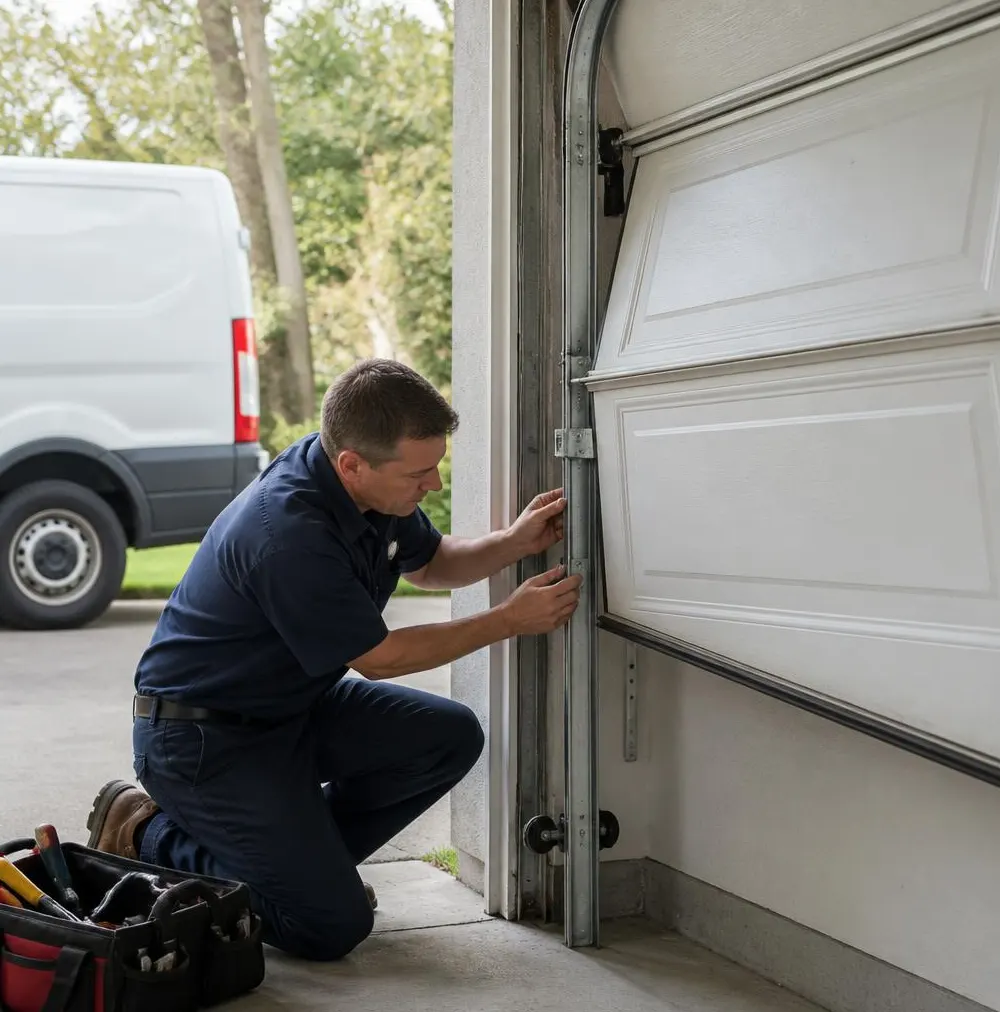
The Mistake Most People Make First
When a garage door won't open, the first instinct is to keep mashing the remote button, or have someone push the wall switch over and over while another person tries to muscle the door up by hand. It's tempting because it feels like troubleshooting, and every so often the door jerks an inch and convinces you it's almost working. But forcing a stuck door against resistance is one of the fastest ways to turn a cheap fix into an expensive one. A door that won't move because of a stripped opener gear, an off-track roller, or a loaded spring can snap a cable, bend a track, or burn out a motor if you keep forcing it. The better move is to stop, watch what the door actually does, and work through the causes in order.
What the Symptom Actually Looks Like
Before you touch a tool, pay attention to which of these describes your door:
- Nothing happens at all — no lights, no hum, no click when you press the remote or wall button.
- The motor hums but the door doesn't move — you hear the unit running, but the door stays put.
- The door starts up, then reverses or stops partway and goes back down.
- The opener lights blink in a pattern but the door doesn't respond at all.
Each of these points toward a different stage in the system, which is exactly why a technician checks things in a specific order rather than guessing.
1. Power Supply
This sounds obvious, but it's the number one thing missed. Check that the opener is plugged in, the outlet has power, and the breaker hasn't tripped. After a hard afternoon storm, it's common for a GFCI outlet in a garage to trip from humidity or a power surge, especially during hurricane season when the grid takes hits across Dallas County. If the outlet is dead, nothing past this point matters.
2. Remote, Wall Switch, and Batteries
If there's power to the unit but the remote does nothing, the problem may be as simple as dead batteries or a remote that's lost its programming after a power flicker. Try the wall-mounted switch directly. If the wall switch works but the remote doesn't, the fix is reprogramming or replacing the remote, not calling for a repair truck.
3. The Emergency Release Cord
If the red release cord hanging from the trolley has been pulled, the door is disconnected from the opener entirely. Someone may have pulled it during a power outage to open the door by hand and forgotten to reconnect it. Reconnecting is as simple as pulling the cord toward the motor until it clicks back into the trolley.
4. Photo-Eye Safety Sensors
If the opener hums or blinks but the door won't move, the safety sensors near the bottom of the tracks are a prime suspect. These sensors have to see each other in a clean, unbroken line. Humidity and condensation can fog the lenses, afternoon downpours can splash mud or pollen onto them, and a bumped bracket from a stored bike or mower can throw the alignment off by just enough to block the beam. A technician wipes the lenses, checks the alignment, and confirms both sensor lights are solid rather than blinking.
5. Springs and Cables
If the opener runs but the door barely lifts, or won't lift at all, the springs are likely not doing their share of the work. The opener motor is built to assist a properly balanced door, not lift the full weight on its own. A technician checks the springs and cables by eye for a disconnected spring, a frayed cable, or a cable that's jumped off its drum. This is not a DIY check to pull apart yourself, since these parts hold serious tension, but confirming whether this is the cause tells you right away whether you're looking at a spring replacement or something further down the list.
6. Track Alignment and Rollers
Bent tracks, rusted rollers, or a door panel that's swollen from moisture can bind the door enough that it refuses to travel. This shows up more often in this area than drier climates, since humidity swells wood and composite panels and salt-tinged air accelerates rust on older tracks and hinges. A tech checks the tracks for gaps, rust buildup, and bends, often caused by storm debris or a vehicle bumping the door.
7. The Opener Motor and Gear
Last on the list, because it's the least common actual cause despite being the first thing people suspect, is the opener itself. A stripped plastic drive gear, a burnt-out motor, or a fried logic board (often from a storm-related power surge) will stop the door cold. Replacing a gear is a moderate repair; replacing the whole opener unit is a bigger decision, especially if the unit is older and already near the end of its working life.
When to Call Selma Garage Door
If you've checked the power, the remote, and the release cord and the door still won't move, that's the point to call in a technician rather than keep testing it yourself. Selma Garage Door handles both Garage Door Repair and Garage Door Opener Repair & Installation, and a service call typically starts with the same checklist above, just with the tools and experience to safely inspect springs, cables, and track alignment without risking an injury. If the issue turns out to be storm-related wear, rust, or a swollen panel, they'll walk you through what needs fixing now versus what can wait.
If your garage door in Selma, Orrville, Valley Grande, or anywhere around Dallas County won't open and you've ruled out the easy stuff, give Selma Garage Door a call. We'll find the actual cause and get it moving again, the right way, the first time.