
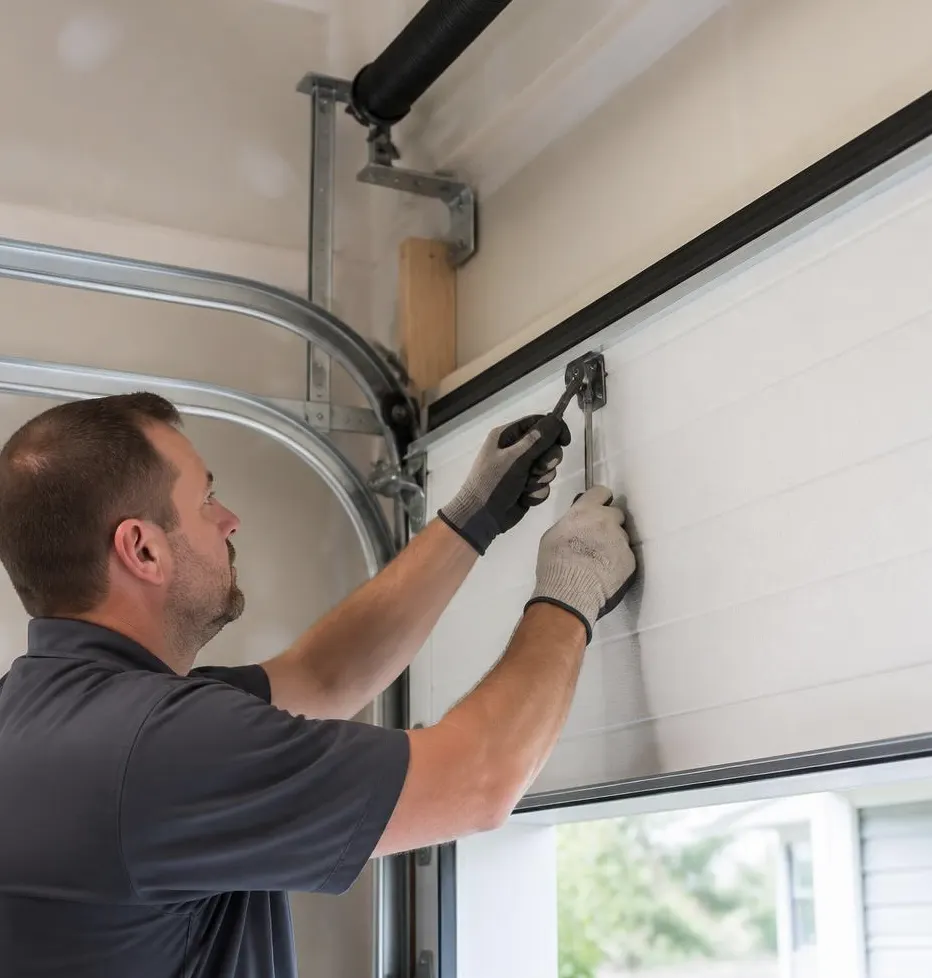
What a Technician Sees on These Calls
A typical call starts the same way: the opener is straining, making a labored grinding noise partway through the cycle, or the door reverses on its own before it reaches the floor. The homeowner usually assumes the opener is failing. Half the time, the opener is fine — it's just been doing the job of a spring that's lost tension or a door that's binding in its tracks, sometimes for months. By the time the opener finally quits, it's often because it was carrying weight it was never built to carry.
This is especially common after a stretch of heavy humidity or storm activity, which is most of the year around here. Wood doors swell and bind in their tracks. Hardware loosens as the door racks slightly under wind load from afternoon storms. None of that shows up as an obvious problem — until the opener starts working overtime to compensate.
Why an Unbalanced Door Wears Out the Opener Early
A garage door opener is designed to do one job: move a door that's already properly counterbalanced by its springs. The springs should be carrying almost all the door's weight. When they're not — because of age, corrosion, or a door that's swollen or misaligned — the opener's motor and gears take on that extra load every single time the door runs. Over weeks and months, this shows up as:
- A motor that runs hotter and louder than it used to
- Stripped or worn drive gears inside the opener unit
- The trolley or belt slipping under strain
- Safety sensors misreading resistance, causing random reversals
- A shortened opener lifespan, sometimes by years
An opener rated for 10-15 years of normal use can fail in a fraction of that time if it's been fighting an unbalanced door the whole way.
How to Test Your Garage Door's Balance
Tools Needed
- Step stool (for taller doors)
- Work gloves
- A helper is useful but not required
Steps
- Close the door fully. Start from a closed position so you can observe the full range of motion.
- Disconnect the opener. Pull the red release cord hanging from the trolley. This disconnects the door from the opener arm so you're testing the door and springs alone.
- Lift the door manually, slowly, to about waist height. Pay attention to how much effort it takes. A properly balanced door should lift with minimal resistance — roughly the effort of lifting a light suitcase.
- Let go and watch. A balanced door will stay in place or drift down very slowly. An unbalanced door will either slam shut or shoot upward on its own — both are signs the spring tension is wrong.
- Repeat at the halfway and three-quarter points. Balance issues sometimes only show up in part of the door's travel, especially with sectional doors where one panel has started to warp or swell.
- Check for visible daylight gaps along the sides while the door is closed. Uneven gaps often mean the door is sitting crooked in its tracks, which throws off balance even if the springs are fine.
- Reconnect the opener by pulling the release cord again (or following the reconnect procedure in your opener's manual) once testing is done.
What's a Homeowner Job and What Isn't
Testing balance is safe and reasonable for a homeowner to do. Adjusting it is not. Torsion springs store enough tension to cause serious injury if handled without the right bars and technique, and extension springs can whip violently if they let go under load. If your door fails the test, the fix is a job for a technician — not a DIY project.
When to Call Selma Garage Door
If your door isn't holding position during this test, or you've noticed the opener running hotter, louder, or reversing unpredictably, it's time to call. We'll check spring tension, inspect the tracks and rollers for the kind of swelling or misalignment common after humid stretches and storm season, and recommend either a spring replacement or a tune-up through our garage door maintenance service — whichever actually solves the problem instead of just replacing the opener that was never really at fault.
If you're in Selma, Orrville, Valley Grande, Craig Field, Plantersville, Marion, Camden, or Prattville and your garage door doesn't feel right when you lift it, give Selma Garage Door a call. We'll find out what's really going on before it costs you an opener.