
What a Tech Sees Three Months After Closing
We get a version of this call several times a year: a family moves into a house in Selma or out toward Valley Grande, everything looked fine at the walkthrough, and then the first hard rain or the first real cold snap exposes something. The door won't seal at the bottom. The opener grinds instead of running smooth. A cable is frayed down to three strands. The home inspector checked a box that said "garage door operates" and moved on, because that's usually as far as a general inspection goes. It opens, it closes, next item on the list. That single pass-fail test misses almost everything that actually costs money down the road.
If you're buying a home with a garage, or you've already closed and never looked past "does it go up and down," here's what to check yourself, and what it means if something fails.
Walk the Garage Yourself
Rust at the Bottom of the Tracks
Dallas County humidity and afternoon downpours mean water finds its way to the lowest points in the garage, and that includes the bottom few inches of track. Light surface rust is cosmetic. Flaking, pitted rust that's eaten into the metal means the track has been wet repeatedly and may need replacing before it bends or binds.
Spring Type, Rust, and Visible Gaps in the Coils
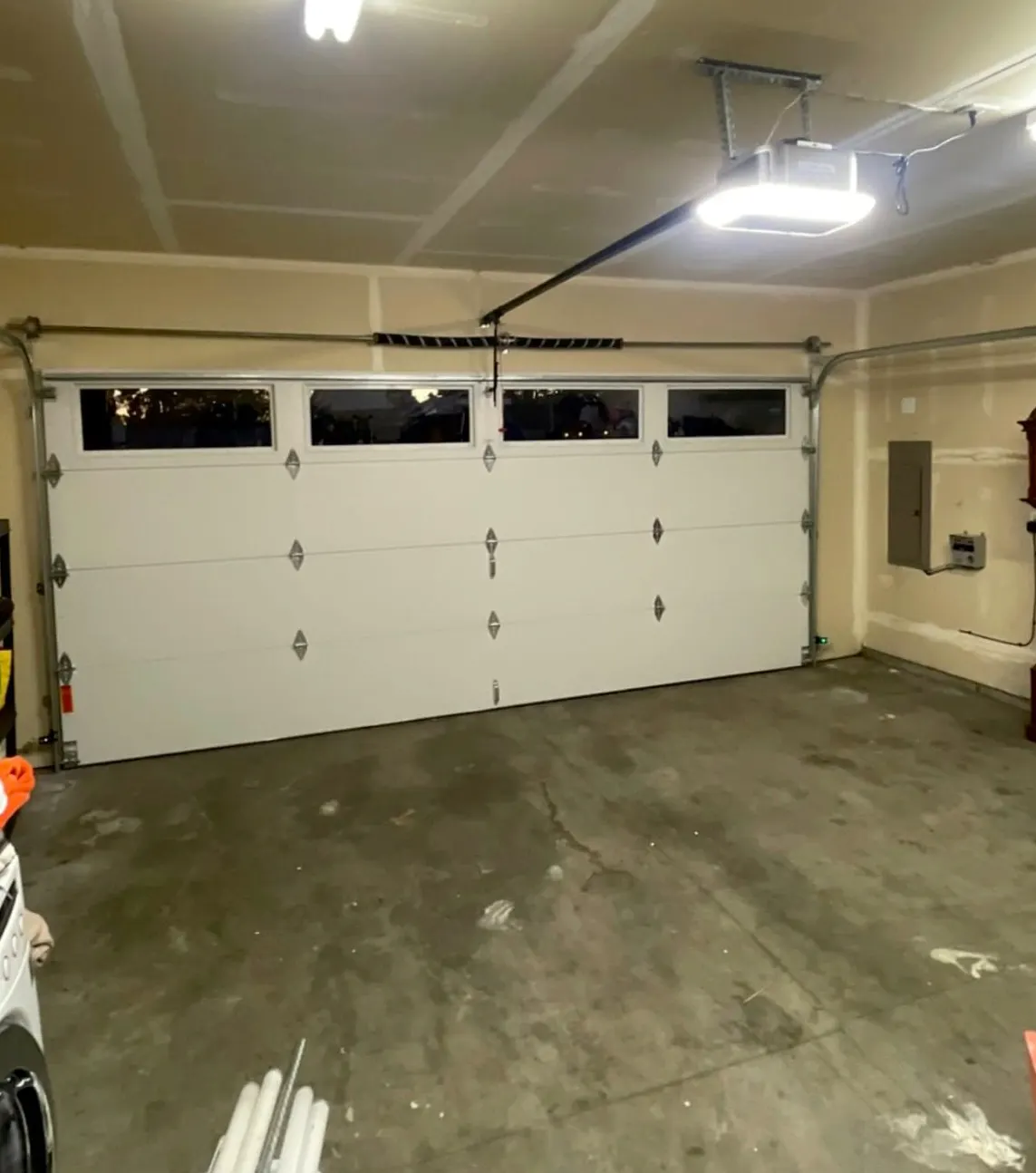
Look up at the torsion spring above the door, or the extension springs along the upper tracks if it's an older setup. Heavy rust on the coils, or coils that look stretched with gaps between them, means the spring is past its working life. This isn't something to test by opening the door — a failing spring is a safety issue, not a maintenance note.
Swelling or Soft Spots on Wood Doors and Jambs
Wood garage doors and wood door jambs absorb moisture in this climate. Press a thumb into the bottom corners and the jamb where the door meets the frame. Soft, spongy wood means rot has already started, usually from water sitting against the base during storm season.
Bottom Weatherstripping That's Cracked or Missing
Run a hand along the bottom seal. Cracked, flattened, or torn weatherstripping lets wind-driven rain under the door during a hard downpour and gives pests an easy entry point. It's a cheap fix on its own, but inspectors almost never flag it because the door still closes fine without it.
Opener Mounting and Bracket Condition
Check where the opener attaches to the ceiling and where the header bracket attaches to the frame. In areas built for wind-load requirements, these brackets matter during hurricane season storms — a loose or rusted bracket is a different problem than a loose opener chain, and it's one a quick visual opener test won't reveal.
Frayed or Kinked Lift Cables
Look at the cables running alongside the springs down to the bottom brackets. Frayed strands, kinks, or rust on the cable itself mean it's close to failing. A cable snapping under tension can drop a door unevenly or send a panel swinging.
Sensor Alignment and Housing Damage
The two small sensor eyes near the bottom of the tracks should be level with each other and free of cracks or moisture inside the housing. Misaligned or fogged sensors are a common reason garages with "working" doors still have inconsistent auto-reverse behavior.
Remote and Wall Control Age
Old openers paired with a single working remote are common in resale homes. If the wall button is yellowed, cracked, or the keypad cover is missing, factor in the cost of updating the opener controls along with anything else you find.
When to Call Selma Garage Door
If you walk through this list and find rust on the springs, frayed cable, or an opener bracket that's loose, that's not a DIY afternoon — it's a call to us. We handle spring replacement and garage door opener repair and installation across Selma, Orrville, Valley Grande, and the surrounding area, and we'll give you a straight answer on what's a quick fix versus what needs to happen before you move boxes into that garage.
Buying a home in Dallas County and want a second set of eyes on the garage door before or after closing? Call Selma Garage Door and we'll come take a look.