
Skip winter prep on a garage door and the bill usually shows up in January, not November. A spring that's already fatigued from months of humidity can snap the first morning the temperature drops into the 30s. Weatherstripping that's cracked and curling lets cold, wet air pour into the garage, which raises heating costs if the space is attached to the house and invites rust onto anything metal stored in there. None of this is dramatic until it suddenly is — a door that won't budge, an opener straining and burning out early, or a spring letting go under tension. An hour of attention now is cheaper than any of those outcomes.
What Winter Actually Does to a Garage Door Here
Alabama winters don't bring the deep freeze other states deal with, but that's part of the problem. Temperatures swing from humid 60s to a hard freeze overnight, sometimes within the same week. That kind of back-and-forth is harder on hardware than steady cold. Metal contracts and expands repeatedly, grease thickens and loses its grip in a cold snap, and moisture that soaked into wood or settled into seams during the fall has nowhere to go but to sit there and cause trouble.
- Stiff, jerky movement on cold mornings as thickened lubricant resists the rollers and hinges.
- Rust spots appearing on tracks, hinges, and spring coils after a run of damp, cool weather.
- Swollen panels on wood or composite doors that stuck shut through a humid fall and now bind against the frame.
- Gaps at the bottom seal that let in cold air, leaves, and the occasional rodent looking for shelter.
The Pre-Winter Checklist
Replace the Weatherstripping If It's Cracked or Flat
The rubber seal along the bottom of the door and around the frame takes the brunt of sun, humidity, and afternoon downpours all year. By late fall it's often cracked, flattened, or pulling away in sections. If daylight shows under the door when it's closed, or the seal doesn't spring back when you press it, it's done its job and needs replacing before cold, damp air starts working its way in.
Lubricate the Moving Parts — With the Right Product
Rollers, hinges, and the torsion spring itself all need a silicone-based or lithium-based garage door lubricant, not household oil or WD-40, which attracts dust and grit and breaks down faster in humid conditions. A light coat on the hinges, roller stems, and spring coils keeps everything moving smoothly even after an overnight temperature drop.
Check Every Bolt and Hinge
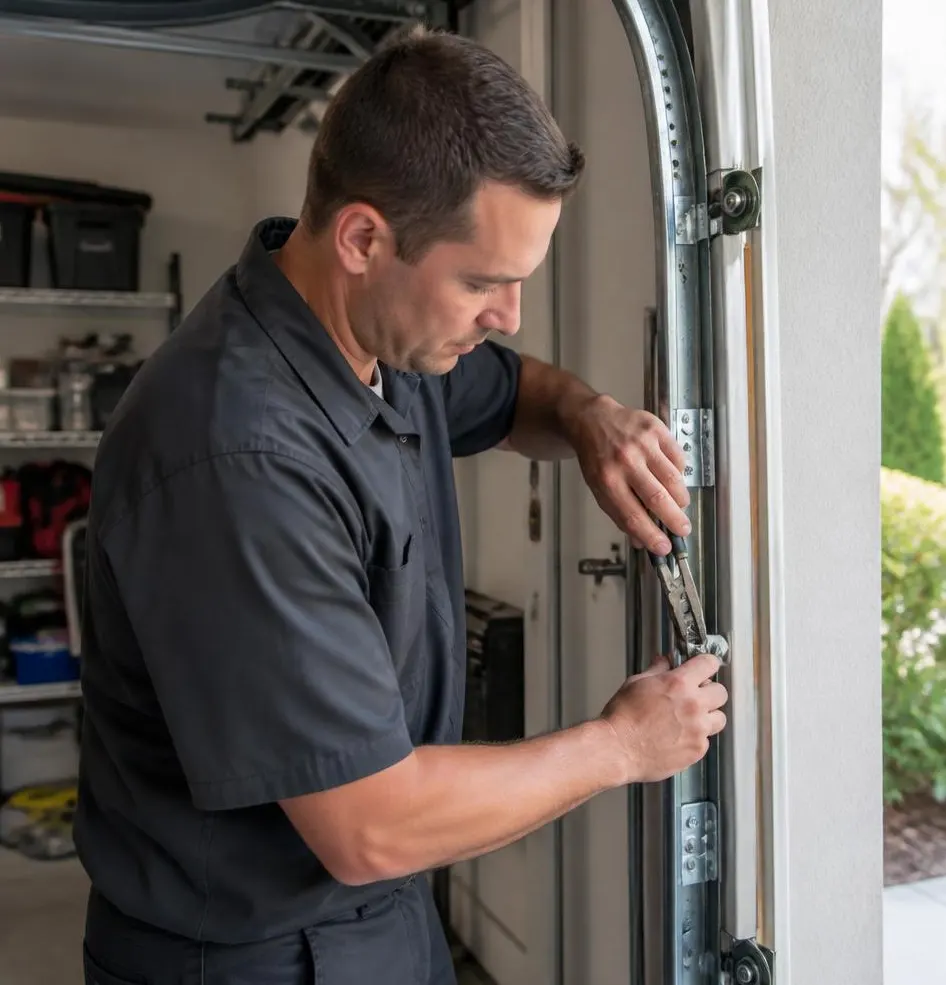
Vibration from regular use loosens hardware over time, and loose hardware is exactly what gives moisture a path to start rust at the joint. Walk the track and door panels with a wrench and snug up anything that's shifted. While you're at it, look at the hinges for hairline cracks — a hinge that's about to fail usually shows a thin crack line before it breaks outright.
Clean and Inspect the Tracks
Dirt, pollen, and summer grime mixed with humidity forms a grime that holds moisture against the metal. Wipe the tracks down with a damp cloth, then a dry one, and check for any rust starting at the seams or mounting brackets. Caught early, surface rust wipes off with a wire brush and a touch of rust-inhibiting paint. Left alone through a wet winter, it spreads.
Test the Auto-Reverse Safety Feature
Cold snaps change how sensitive the photo-eye sensors and auto-reverse mechanism behave, especially if condensation builds up on the sensor lenses overnight. Place a block of wood in the door's path and close it — the door should reverse on contact. Wipe the sensor eyes clean while you're down there; morning dew and humidity leave a film that can throw off the sensor's alignment over time.
Rust and Moisture Deserve Extra Attention Here
Between the humidity and the stretch of storms that run through hurricane season into fall, hardware in this area deals with more moisture exposure than a lot of the country sees. Springs, in particular, are worth a close look — a coil with surface rust is losing strength even if it still looks intact, and a rusted spring under tension is far more likely to fail without warning. If you see flaking rust anywhere on the torsion spring, that's not a DIY fix; it's a sign the spring needs professional replacement before it's tested by the first real cold snap.
Don't Forget the Opener's Battery Backup
If storms knock out power this winter, a garage door opener with battery backup is the only way to get the door open or closed without manually releasing it. Test the backup battery now, not during an outage. Most units have a self-test button or will run through a quick cycle on battery power when you unplug the opener briefly. A battery that's more than a few years old often can't hold a full charge even if it still appears to work.
When to Call Selma Garage Door
If the door is sluggish even after lubrication, if you spot rust on the spring coils, or if the bottom seal is too far gone to simply swap out yourself, it's time to call in a technician rather than keep working around the problem. Selma Garage Door handles garage door maintenance visits that cover exactly this kind of pre-winter tune-up — lubrication, hardware tightening, track and sensor inspection — in one trip. If a spring shows rust or fatigue, our spring replacement service gets it swapped out safely with the correct tension spring for the door's weight, which isn't something to attempt without the right tools.
Get your garage door checked before the next cold snap rolls through Selma, Orrville, Valley Grande, or anywhere else in Dallas County — call Selma Garage Door today.